
LOW RISK
Two-of-two co-sign
Ordinary transfers clear in a single step: you and the AI co-signer both sign, value moves, done.
On an ordinary chain, value moves the instant a key signs — before anyone checks whether it should. Chaingentic is the native home of the AIERC Protocol. AIERC reads the intent, authority, policy, and risk behind every transaction and clears it before value moves. Chaingentic settles it.
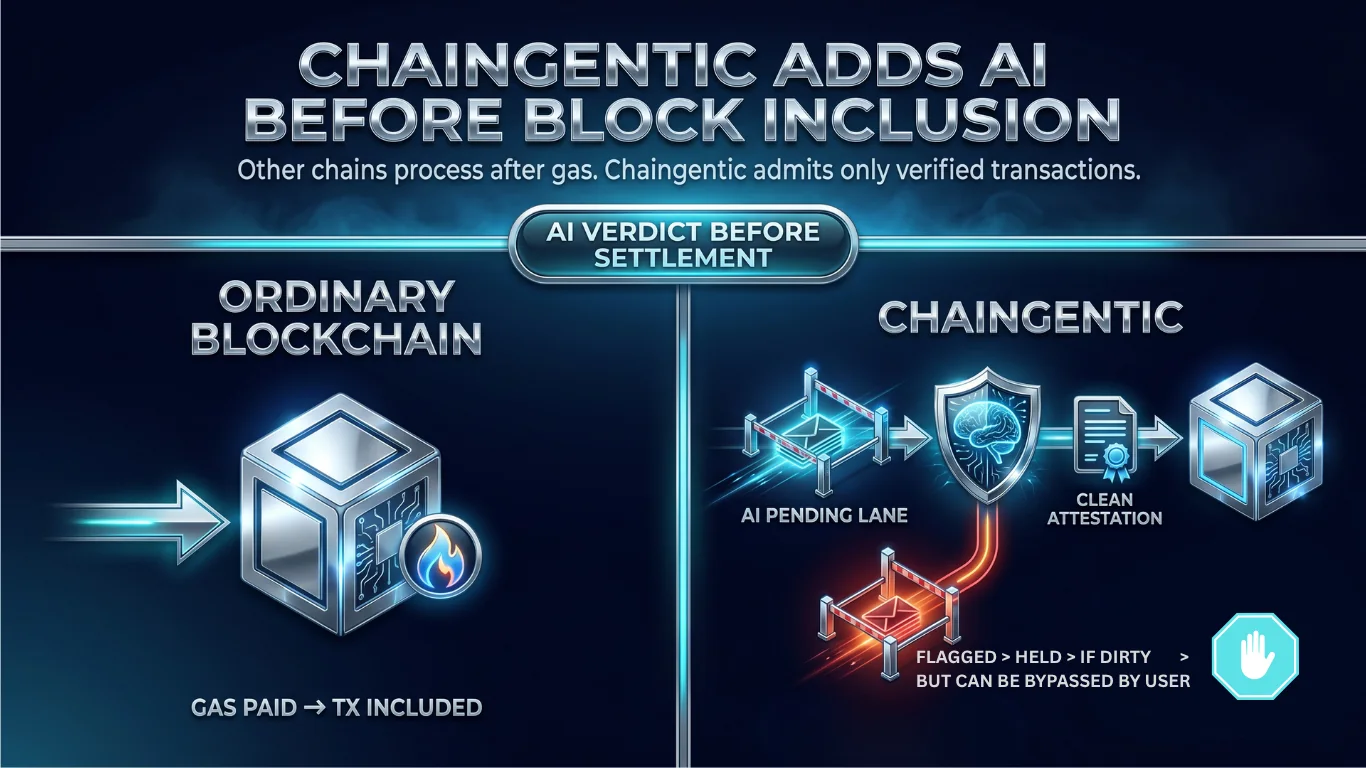
Most blockchains run a transaction the moment gas is paid and a valid signature arrives. That proves a key approved it. It does not prove the transaction is safe, intended, within policy, or even understood by the person or agent sending it.
Chaingentic changes the order. Before a transaction settles, the AIERC Protocol evaluates it in an admissibility lane. Routine activity clears straight through. When something looks wrong, only that one transaction is held out of block inclusion for a closer look — never the chain, which keeps running for everyone else. The outcome stays simple: CLEAN transactions proceed; FLAGGED transactions are held back for review, with everything the AI saw written down.
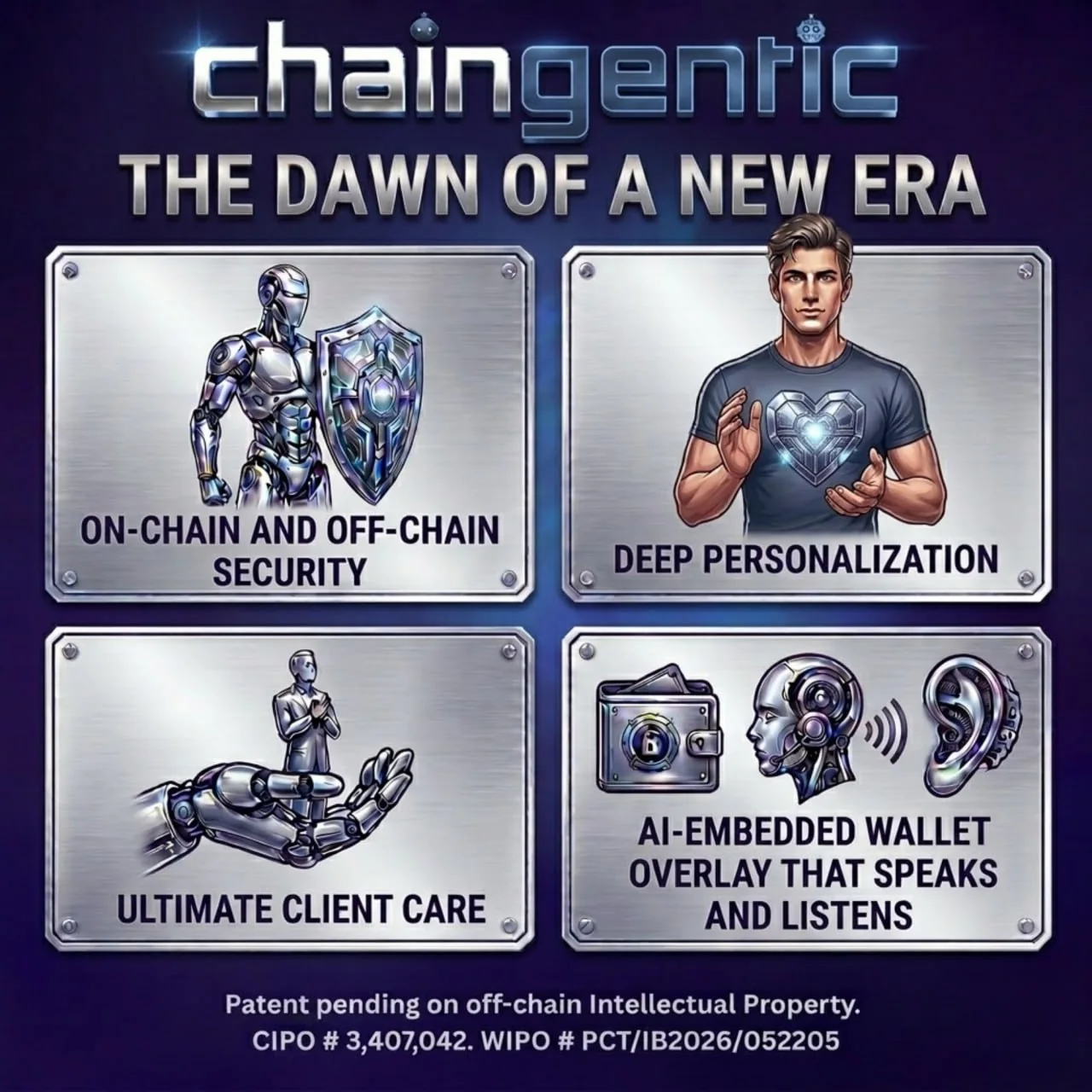
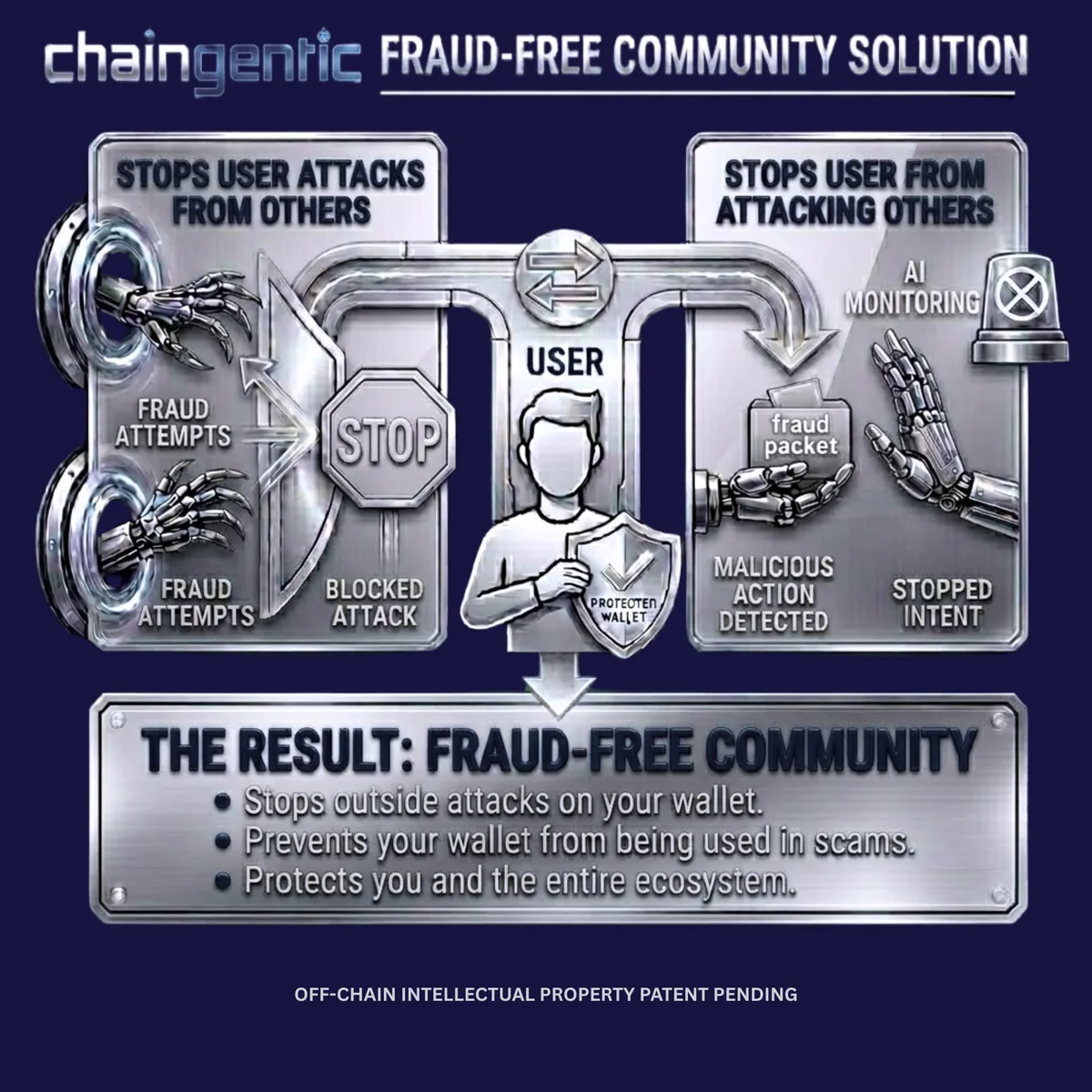
Every chain promises to protect you from attackers. Chaingentic keeps that promise — then does the thing no one else dares: it stops fraud coming from inside the gates too.
The AI reads every transaction both ways. Someone trying to drain your wallet? Stopped before it settles. An account on this chain trying to scam someone else? Stopped just the same — and the attempt is recorded, permanently, for anyone to see.
No watchlists. No “proceed at your own risk.” The dishonest move simply doesn’t go through — whoever is making it. That is what fraud-free actually means: bad actors have nowhere to hide, in either direction.
Routine activity clears on a fast two-signer co-sign. The moment something looks off, the same AI co-signer raises the bar — escalating to a full Consensus Council that must reach a 5-of-7 majority before the action moves. One mechanism, a threshold that moves with the danger.
Ordinary transfers clear in a single step: you and the AI co-signer both sign, value moves, done.
An anomaly, uncertain authority, or an elevated-risk action raises the threshold — an independent multi-model Consensus Council must agree before anything settles.
However high the bar went, the answer stays simple: CLEAN or FLAGGED, with the reasoning recorded.
AIERC is the foundation — the intelligence that decides whether value should move. Chaingentic is the native chain where AIERC runs and where cleared activity settles. Around them sits a self-checking token mechanism, a native coin and metering unit, and a record of every decision.
The reasoning and clearance layer everything else is built on. AIERC reads the intent, authority, policy, security, and admissibility behind a transaction and decides whether value should move — before it moves.
The Layer 2 blockchain where AIERC-cleared activity settles. EVM-compatible (it runs the Ethereum Virtual Machine, so Ethereum tools work out of the box), built on Polygon CDK, settling to Ethereum. On Chaingentic this hold-and-document protection is part of the chain itself, not bolted on the side. The sequencer holds a flagged transaction out of block inclusion until AIERC clears it — the chain never stops.
Tokens that check themselves. An AIERC-193 token ties its own transfer behavior to AIERC reasoning, so every transfer is evaluated before value moves. Built in and working today.
$AIERC is the native coin. It pays for AI evaluation, transactions, and AI usage on the Crypto Claude AI Platform. GasIQ is the metering unit — it meters AI evaluation the way gas meters computation — and $AIERC buys it.
Every protected transaction leaves a record: the proposed action, the AIERC verdict, the GasIQ Consumption Record, and the settlement receipt — an auditable trail of exactly what the AI did and why.
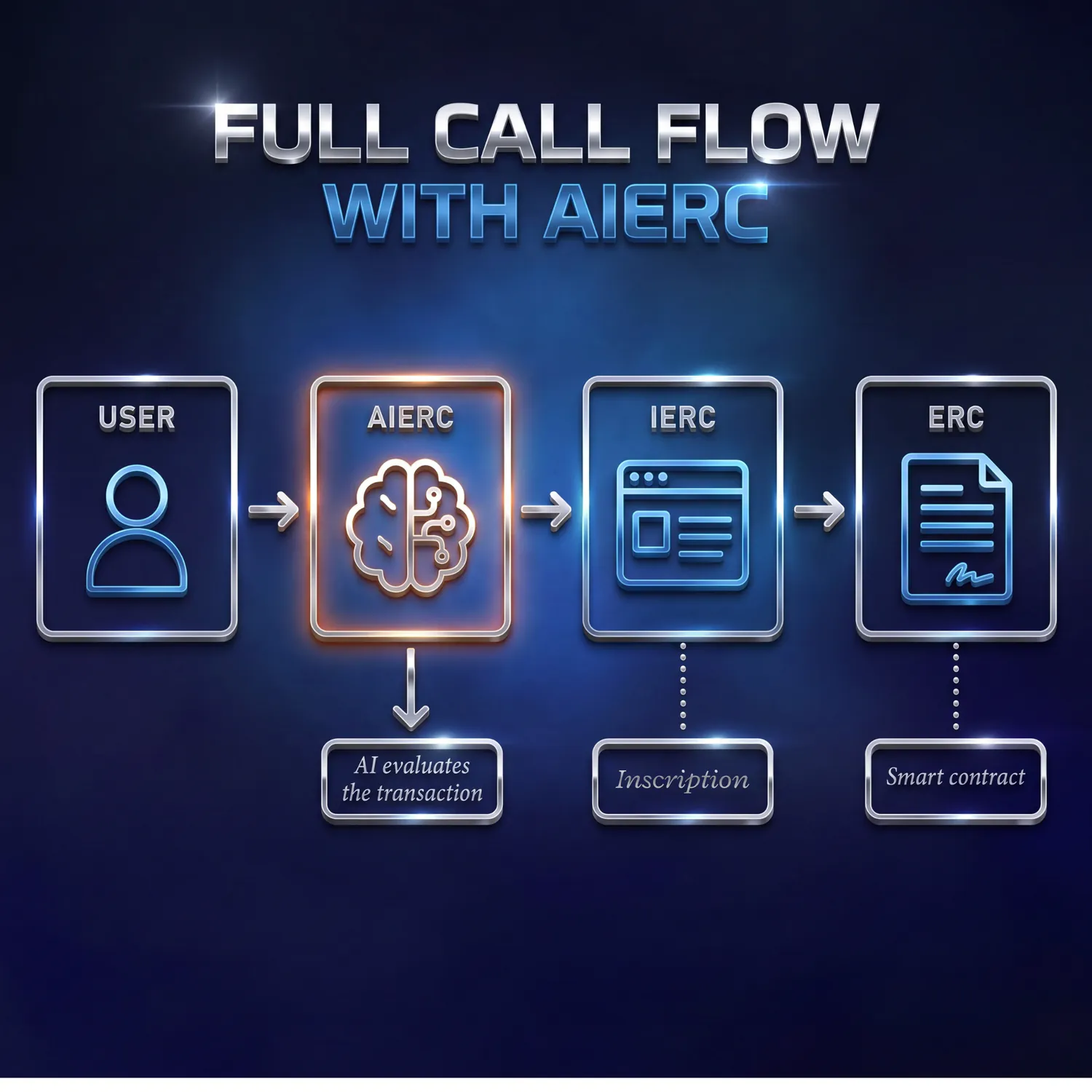
The user or agent starts an action. AIERC evaluates it before settlement. The cleared action passes through the AIERC interface that carries its clearance. The smart contract receives it only after the right AIERC clearance path is complete.
AIERC meets users and builders wherever protection is needed: at the network, at the wallet overlay, or inside the token itself.
Any EVM-compatible network can route transactions through AIERC for a pre-settlement check before they ever broadcast. Chaingentic runs this natively; other networks anchor AIERC into their own transaction flow.
The AIERC wallet overlay rides on top of the wallet a person already uses. Before they — or their agent — sign, it explains in plain language what the transaction really does, what permissions it grants, and what looks dangerous.
Mint an AIERC-193 token and the protection travels with it. Its transfer path is wired to AIERC, so every transfer — on any wallet, anywhere — is evaluated and documented before value moves.
AIERC-193 ties a token's transfer behavior to AIERC reasoning. When an AIERC-193 token moves, AIERC evaluates what is happening, what authority exists, what policy applies, and whether the movement should be admitted — before value moves. This is built in and working today.
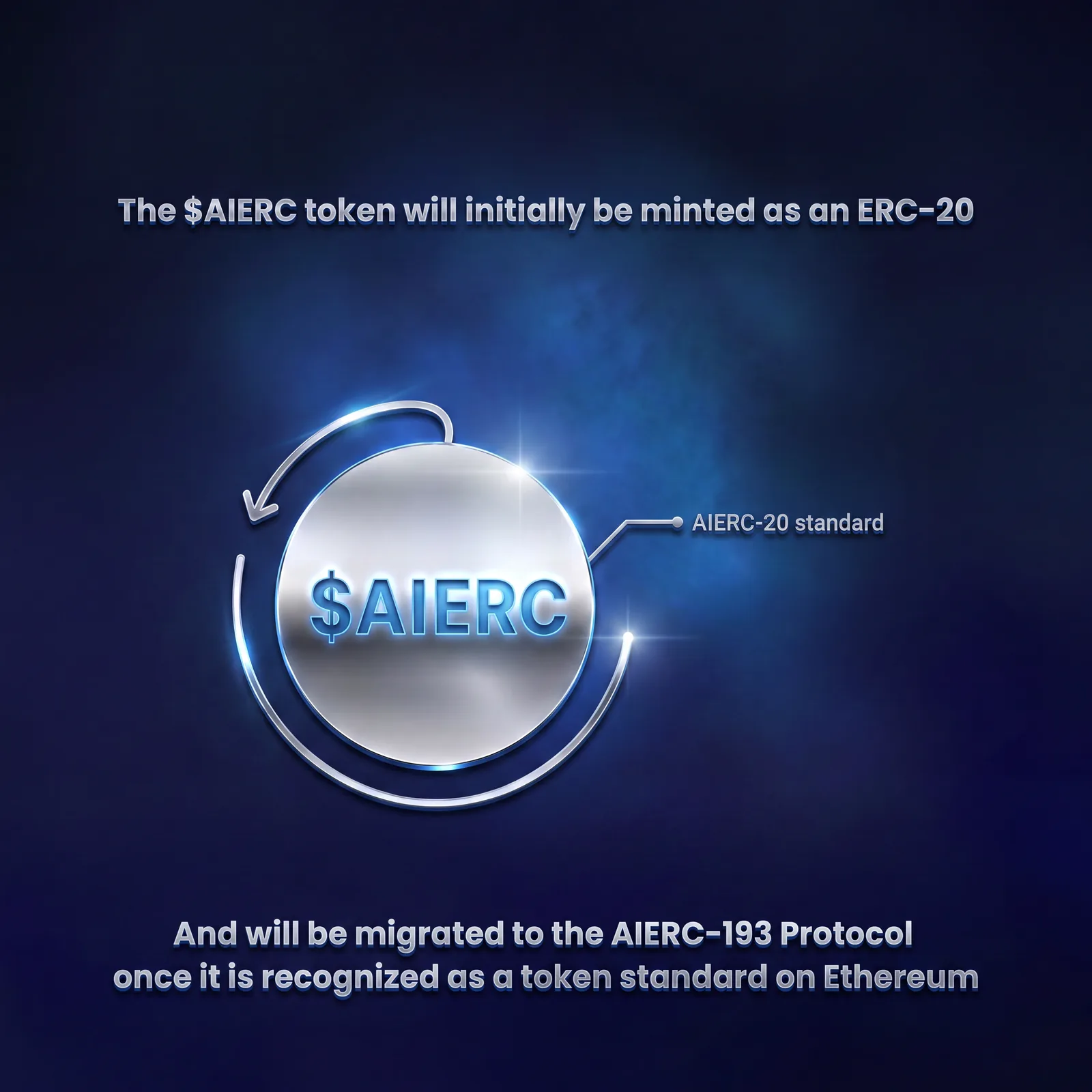
$AIERC, the native coin, is a clean, standard ERC-20 so it lists and trades anywhere. AIERC-193 is the mechanism that lets a token protect itself: every transfer evaluated, and documented, before it settles.
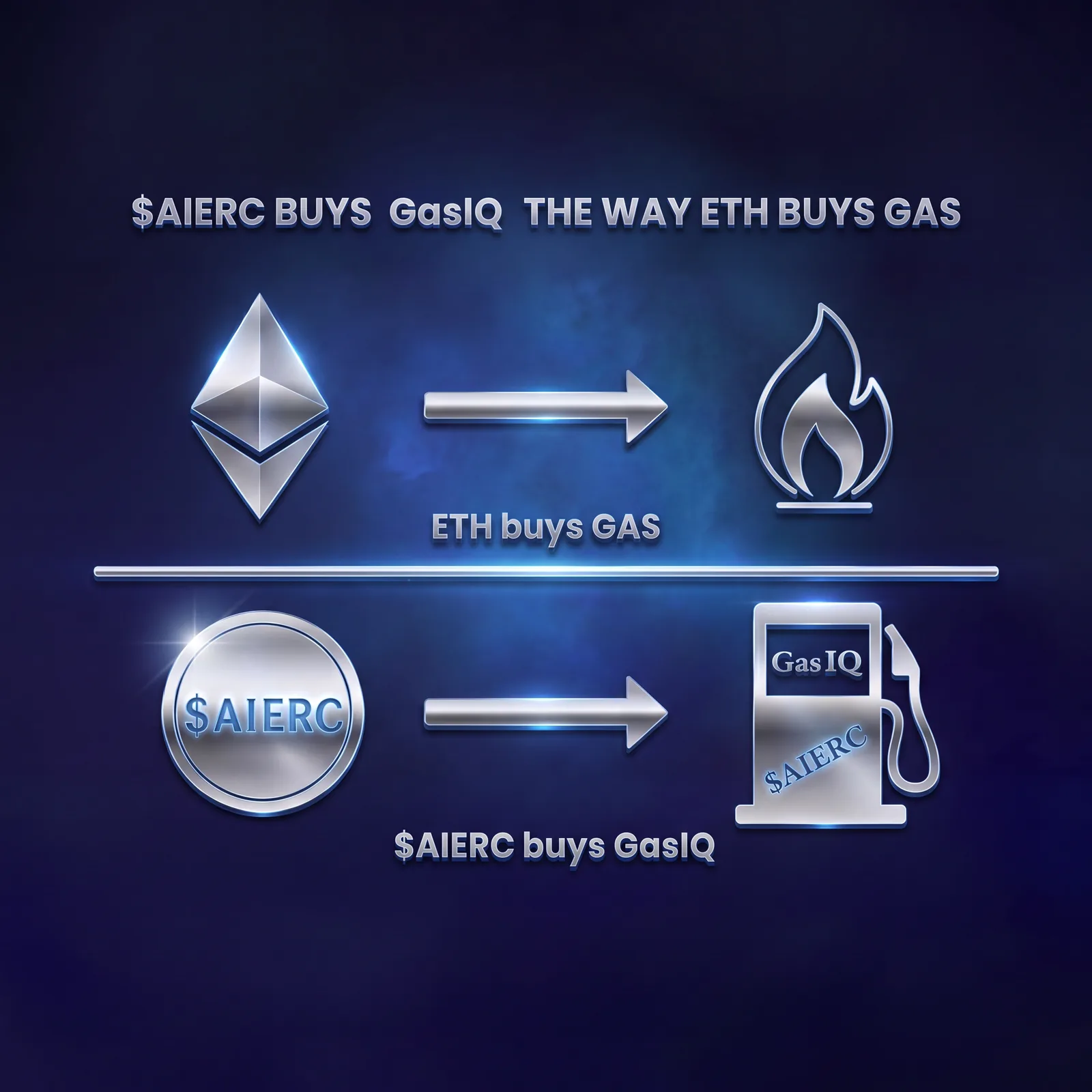
$AIERC is the native coin of the AIERC Protocol. GasIQ is the metering unit for AI evaluation — it meters intelligence the way gas meters computation. On Ethereum you spend ETH on gas; here you spend $AIERC on GasIQ for transaction evaluation, pre-settlement checks, wallet-overlay intelligence, agentic-payment review, and every other AIERC service. The same $AIERC also buys your usage on the Crypto Claude AI Platform.
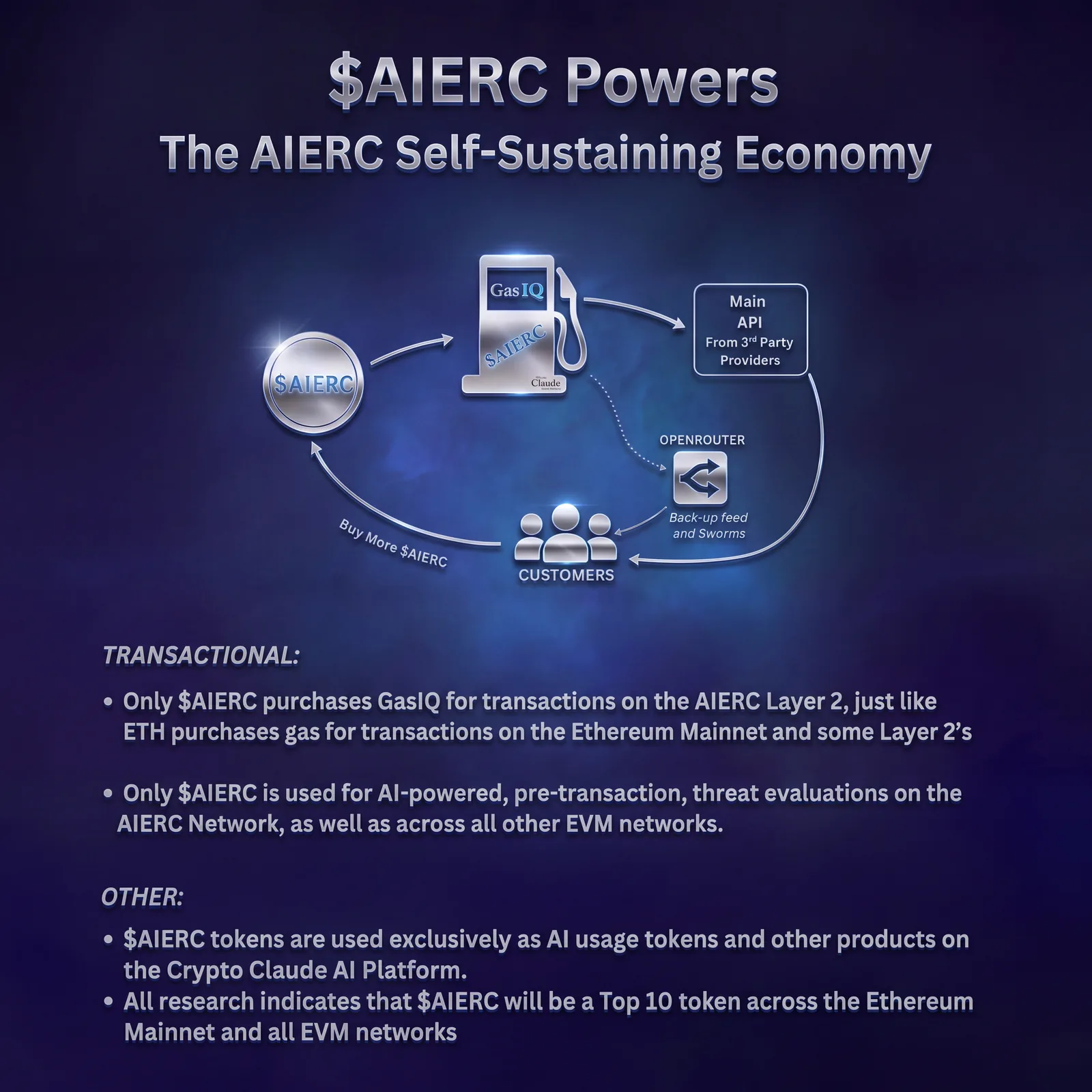
Chaingentic writes down everything the AI did during a transaction — the action it was asked to clear, what AIERC reasoned, the verdict it returned, and the GasIQ it consumed. Not a black box that says yes or no, but a readable record of exactly what happened before value moved, kept for anyone who needs to check.
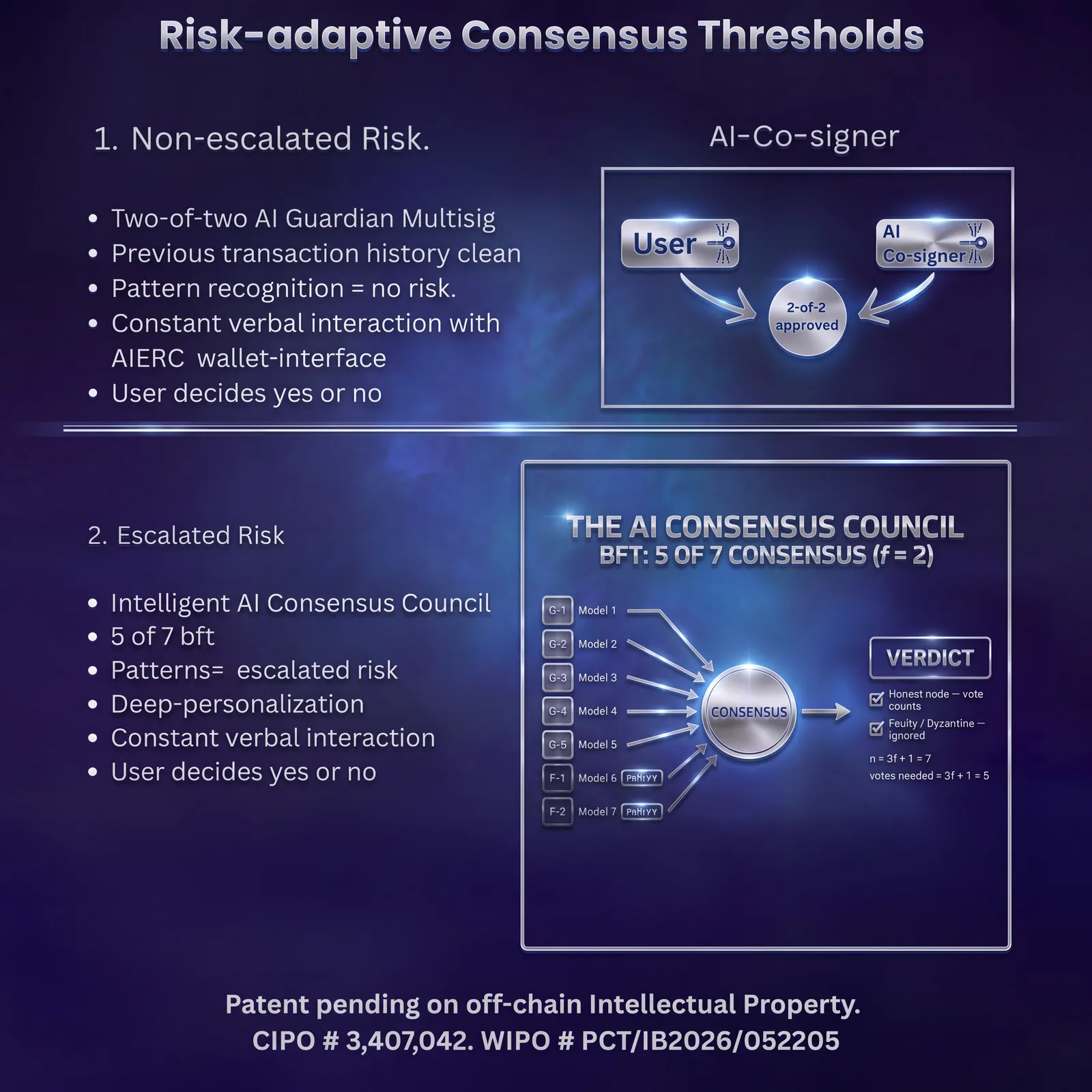
AIERC is progressive. Most activity is cleared on a direct AI path in a single step. When AIERC sees a genuine anomaly — an unusual pattern, uncertain authority, or an elevated-risk action — it raises the bar: the AI co-signer escalates to the Consensus Council, an independent multi-model panel that must reach a 5-of-7 majority before the action is admitted.
The result stays easy to read: CLEAN or FLAGGED — what the system saw, and what you can do next.
The protocol and the chain are the foundation. Crypto Claude is what people touch: an AI wallet assistant that reads every transaction with you, in plain words, before you sign.
It tells you what a transaction does and who it pays — before you approve it.
Drainers, malicious approvals, and look-alike addresses are flagged the moment they appear.
AI usage on the platform is paid for in $AIERC — the same native coin that meters AIERC across the protocol.
Hardware wallets, firewalls, browser warnings, and manual review all help — but they sit at the edge of the transaction flow. AIERC is different: it evaluates admissibility before settlement.
| Feature | AIERC and Crypto Claude | Hardware Wallet | Firewall | Manual Review |
|---|---|---|---|---|
| AI-assisted approval | Yes | No | No | No |
| Transaction evaluation | Yes | No | Partial | No |
| Plain-language explanation | Yes | Partial | Partial | Yes, but late |
| Consensus Council escalation | Yes | No | No | No |
| Documented decision record | Yes | No | No | Partial |
Most agentic payment systems only ask whether an authenticated agent is allowed to use a payment method, API account, or credential. Chaingentic and AIERC go deeper: they ask whether the economic action itself should be admitted — before value moves.
Receive the proposed action from a user, agent, merchant, app, wallet, or enterprise workflow.
Bind the action to its mandate: limits, recipients, revocation status, user preferences, and enterprise policy.
Evaluate intent, authority, policy, security posture, transaction context, and admissibility.
Evaluate cost, route, sponsorship, urgency, network conditions, and execution feasibility.
Permit settlement only when the AIERC clearance is valid and current. Anything questionable is held out of block inclusion, not pushed through.
Write the proposed action, the AIERC decision trace, the GasIQ consumed, and the receipt into one auditable record.
Whoever you are, you plug into the same protection — evaluated, explained, and documented before value moves.
Any EVM-compatible network can route transactions through AIERC and give its users a pre-settlement safety check, safer flows, and clearer wallet intelligence — without building protection from scratch.
Set your rules once — limits, allowlists, blocked addresses, approval thresholds — and every transaction is checked against your policy before it settles, with a documented record of every decision. Protection lives in the protocol, not bolted on after.
Most people learn a transaction was malicious after their wallet is already drained. AIERC flips that. It reads what a transaction truly does — the hidden approval, the drainer contract, the address that isn't who you think — and tells you, in plain words, before you ever sign. Your AI co-signer reads every transaction with you.
Enterprises need autonomous workflows that stay inside approved mandates. AIERC gives teams a way to connect spending rules, delegated authority, transaction policies, and evidence records before settlement.
| Delegated authority | Bind actions to user, team, agent, or workflow mandates. |
| Spending controls | Apply limits, recipients, timing, route conditions, and revocation status. |
| Explainability | Present plain-language reasoning before sensitive actions settle. |
| Support and audit | Preserve evidence records for review, dispute handling, and compliance. |
Our patent-pending coverage is the off-chain AI reasoning, evaluation, orchestration, verdict generation, and decisioning — the intelligence that decides whether value should move. It does not cover $AIERC, AIERC-193, GasIQ, the deployed contracts, market activity, or any tradable asset.
Tell us what you are working on. The Chaingentic team will follow up with the right next step.
Email: contact@chaingentic.io